

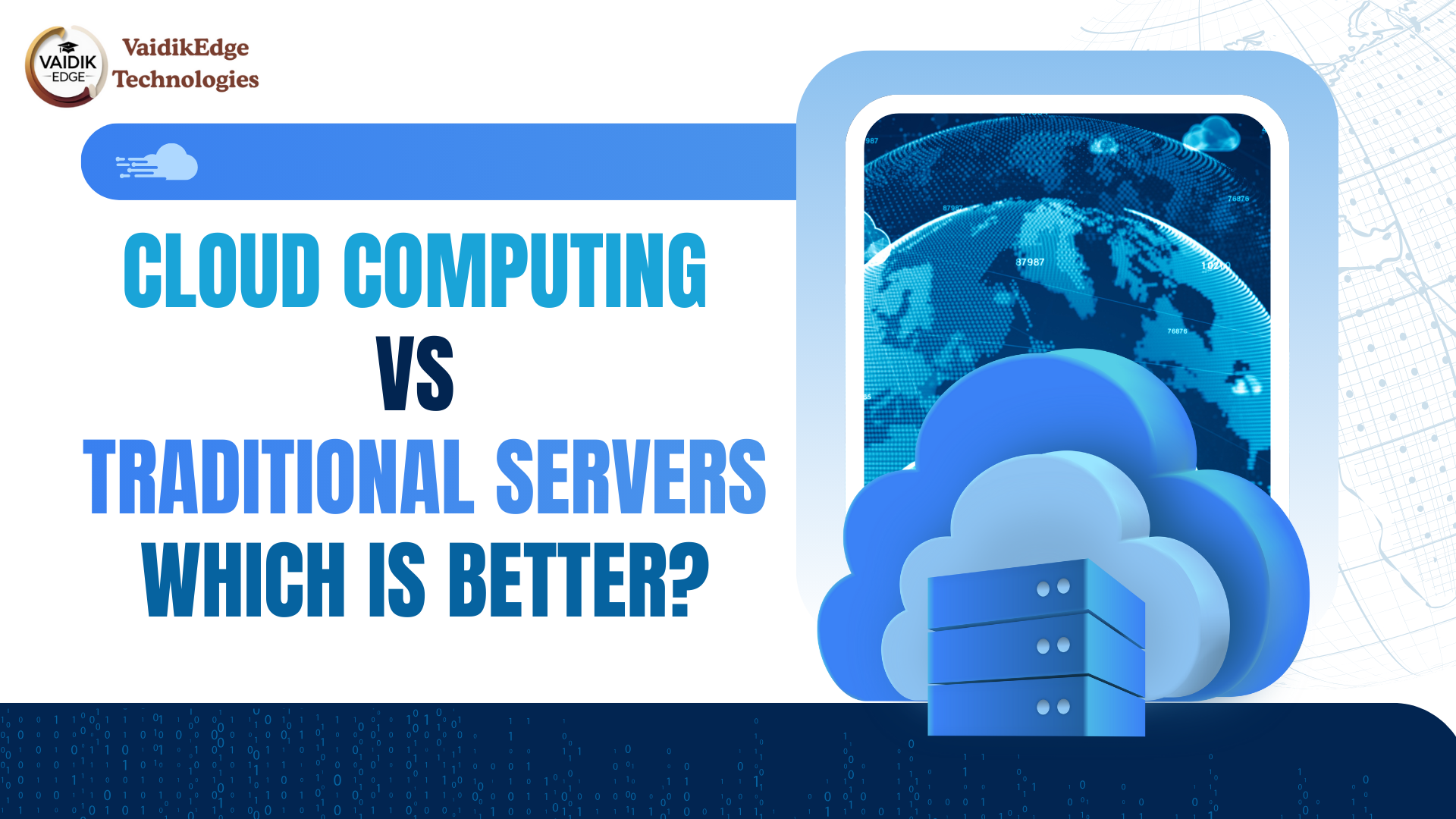
As businesses and organizations continue to adopt digital technologies, one fundamental question often arises: Should you choose cloud computing or traditional servers? Both approaches have their own strengths and limitations, and the right choice depends on factors like cost, scalability, security, and business goals.
In this blog, we’ll compare cloud computing vs traditional servers to help you decide which is better for your needs.
What Is Cloud Computing?
Cloud computing delivers computing resources—such as servers, storage, databases, and software—over the internet. Instead of owning physical hardware, businesses rent resources from cloud providers like AWS, Microsoft Azure, or Google Cloud and pay only for what they use.
Key Characteristics of Cloud Computing
- On-demand resource availability
- Pay-as-you-go pricing model
- High scalability and flexibility
- Managed infrastructure and updates
What Are Traditional Servers?
Traditional servers (on-premises servers) are physical machines installed and maintained within an organization’s own data center or office. The business is responsible for hardware, maintenance, security, power, and upgrades.
Key Characteristics of Traditional Servers
- One-time capital investment
- Full control over hardware and data
- Fixed capacity and limited scalability
- In-house maintenance and IT staff required
Advantages of Cloud Computing
- Scalability: Easily scale resources up or down based on demand
- Cost Efficiency: No need to buy expensive hardware
- Speed & Agility: Faster deployment and innovation
- Global Access: Ideal for remote teams and global operations
- High Availability: Redundant infrastructure ensures uptime
Cloud computing is especially beneficial for startups, growing businesses, and digital-first organizations.
Advantages of Traditional Servers
- Complete Control: Full ownership of data and hardware
- Customization: Tailored infrastructure for specific needs
- Compliance Needs: Suitable for highly regulated environments
- Predictable Costs: Fixed long-term infrastructure expenses
Traditional servers may be preferred by organizations with strict data control or legacy systems.
Security: Cloud vs Traditional Servers
Contrary to common myths, cloud platforms often provide stronger security than traditional servers. Major cloud providers invest heavily in advanced security technologies, encryption, and compliance standards.
- Cloud Security: Shared responsibility model, continuous monitoring, AI-based threat detection
- Traditional Security: Fully dependent on internal IT team and budgets
Both can be secure when managed correctly, but cloud security is usually more advanced and scalable.
Which Is Better for Businesses?
Choose Cloud Computing If:
- You want lower upfront costs
- You need fast scalability
- Your team works remotely
- You want built-in disaster recovery
Choose Traditional Servers If:
- You need full hardware control
- You have strict regulatory requirements
- You run legacy applications
- You already own data center infrastructure
The Hybrid Approach: Best of Both Worlds
Many organizations today adopt a hybrid model, combining cloud computing with traditional servers. This approach offers flexibility, security, and cost optimization while leveraging existing infrastructure.
Cloud computing is generally better for flexibility, scalability, and innovation, while traditional servers still make sense for specific control-driven use cases.
For most modern businesses and startups, cloud computing is the smarter and more future-ready choice.